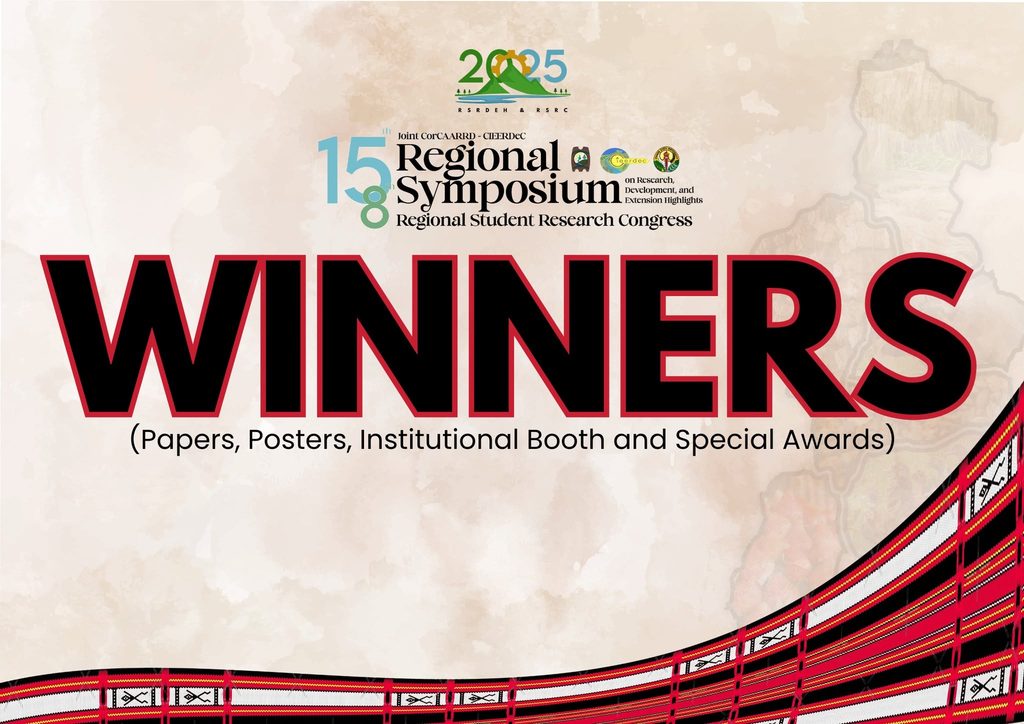
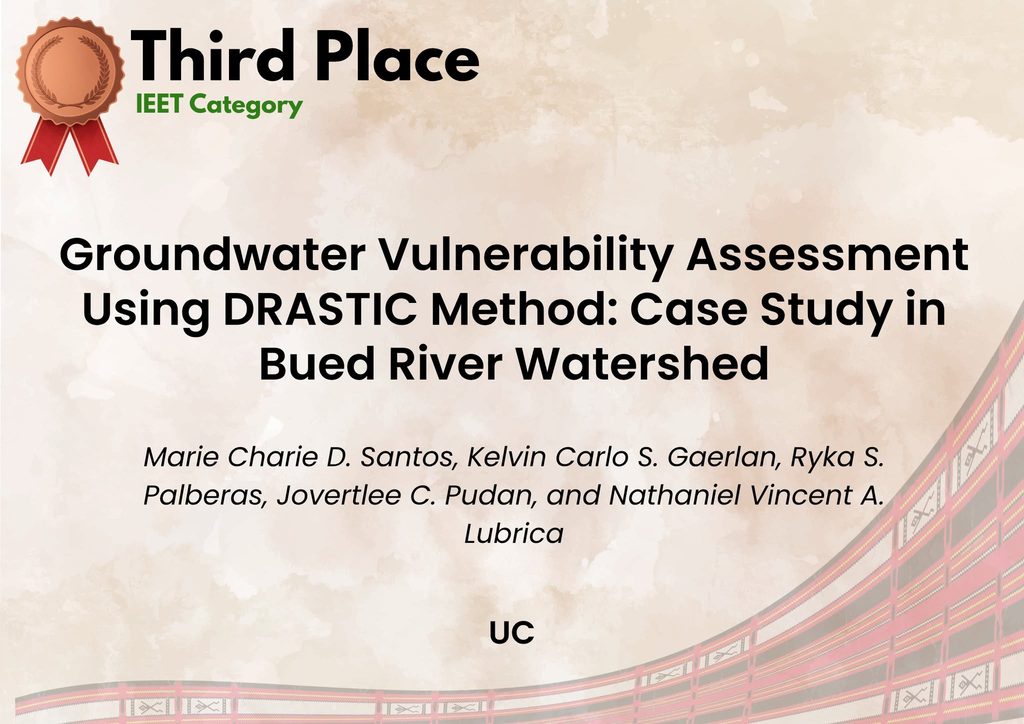
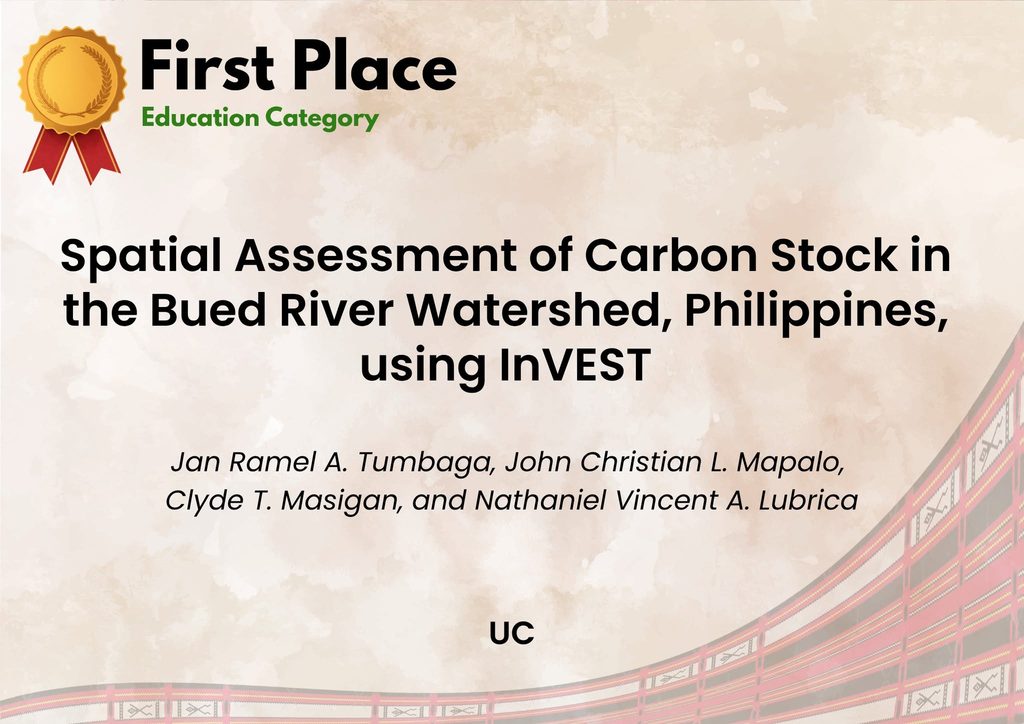
Two University of the Cordilleras (UC) studies on the Bued River watershed were among the winners at the 15th Joint Regional Symposium on Research, Development and Extension (RDE) Highlights and the 8th Regional Student Research Congress. The studies examined groundwater vulnerability and carbon stock across a watershed spanning Baguio City and the municipalities of Tuba and Itogon in Benguet.
Ifugao State University (IFSU) hosted the event on October 28–30, 2025. It was organized by the Cordillera Consortium for Agriculture, Aquatic and Resources Research and Development (CorCAARRD) and the Cordillera Industry, Energy and Emerging Technology Research and Development Consortium (CIEERDeC). Under the theme “Happitan (Conversations): Leveraging Science and Technology Towards Sustainable and Innovative Communities,” the symposium brought together researchers, extensionists, students and representatives of government agencies and the private sector. Entries were recognized through oral and poster presentations, institutional booths and special awards.
The winning studies
Groundwater Vulnerability Assessment Using DRASTIC Method: Case Study in Bued River Watershed. This study mapped how easily pollution at the surface could reach groundwater in the Bued River watershed. The DRASTIC method rates seven factors: depth to water, net recharge, aquifer media, soil media, topography, impact of the vadose zone and hydraulic conductivity. Combining them shows which areas need the most protection. These maps can help local governments and water managers decide where to limit polluting land uses and protect groundwater sources.
Spatial Assessment of Carbon Stock in the Bued River Watershed, Philippines, using InVEST. This study estimated and mapped the carbon stored across the watershed’s land-cover types using InVEST, an ecosystem-services modeling tool. Forests and other vegetation that store carbon also protect watershed functions such as soil retention and water regulation. The resulting maps show where land-cover change would most affect the watershed’s health.
Building on UC’s watershed work
Both studies add to UC’s long-running research on the Bued River watershed. Through Project DANUM – Decision Support and Nurturing Management of Watersheds, funded by the DOST – National Research Council of the Philippines, UC has worked with the LGUs of Baguio, Tuba and Itogon on watershed monitoring and land-cover mapping. Presenting the new findings before CorCAARRD and CIEERDeC shares them with the regional research agencies, universities and government offices that plan and fund development in the Cordillera.
The groundwater vulnerability study supports SDG 6 (Clean Water and Sanitation) by identifying where groundwater sources need protection from pollution. The carbon stock study supports SDG 13 (Climate Action) and SDG 15 (Life on Land) by valuing the watershed’s forests and vegetation. Sharing both through regional research consortia of universities and government agencies reflects SDG 17 (Partnerships for the Goals).
Sources
- CorCAARRD, congratulatory post on the winners of the 2025 Regional Symposium on RDE Highlights and the 8th Regional Student Research Congress (Facebook)
- IFSU – IFSU hosts 15th Reg’l Symposium on RDE highlights, 8th Student Research Congress
- DOST-NRCP Basic Research Information System – Project DANUM